This is a fiscalendar report – for both the fiscal year 2024-25 and the calendar year 2025! Do read to know about what we have been upto – and we would love to hear from you!
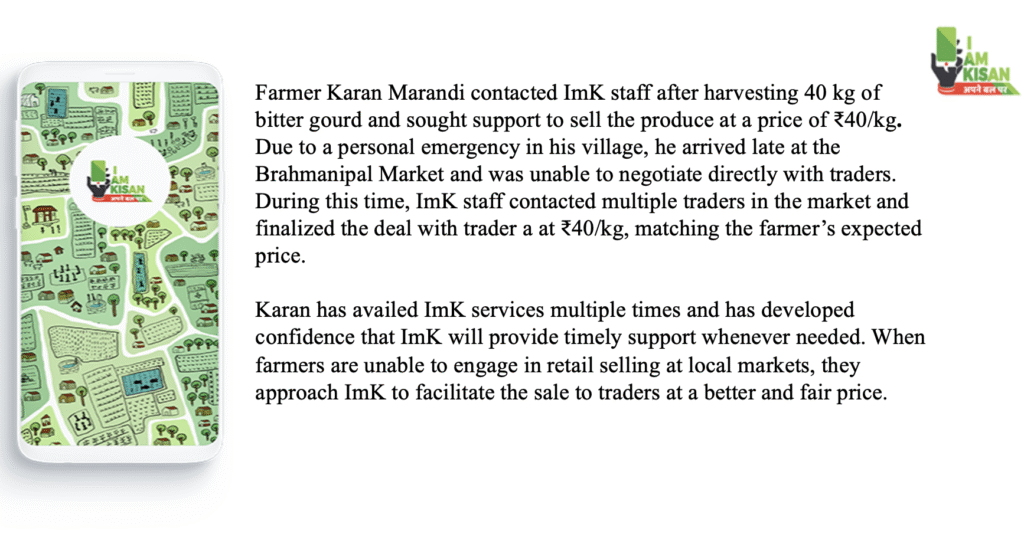
I am Kisan, our first offering, was launched in 2017. It was an offline mobile app to provide smallholder farmers curated information to supports their decision making. In 2018, we expanded to a wider range of information and created an online application. In 2025, we continue to provide credible and usable market information to small holder vegetable farmers that helps them in their decision making and helps reduce risk. Farmers pay for this information. They receive a daily SMS with market rate of their produce and a village level advisory. They also reach us to help sell, when needed. It is not a compulsion, it is to widen the possibilities for them. I am Kisan services continued with our slow and steady growing base of subscribers. We provided this service to 194 subscribers during this period. We visited 36 markets in the region this year, doing deals across 18 markets. We collect prices on a regular basis from seven markets in the region. We facilitated 265 deals and dealt with 44 traders. The promise of zero post-harvest loss to farmers for watermelon makes it a robust offering of I am Kisan. We are continuing work with jackfruit, pumpkin besides the vegetable crops of bitter gourd, tomato and chilly. We also gained some experience in tamarind and drumstick deals. In these deals, farmers speak with traders directly – we support them in connecting, negotiation and in closing the deal. It is not just that one sale that the farmer does with us. It is a comfort in knowing the market through having engaged with it profitably and with confidence. अपने बल पर
For some farmers, the market advisory service of providing daily market prices is a credible source to bargain and demand better prices for their produce from traders and FPCs. For others, it helps them understand market price trends across different markets. Sometimes, it is the change in the way in which they have been selling. Farmers like, Padmini Patra, Dakshina Majhi ( Kusumjodi village), Rama Soren (Baldiapal village) Singo Marandi (Gondriposhi), Daman Baskey (Rasol village) who call us and tell us that they would now like subscription for their current crop. It’s not just the subscription fees or sales commission these farmers give us, they give us confidence that there is value in our service. It also makes us more accountable and responsible to get the most credible and usable information for them. Over the last two years, farmers from the Narpunga area selling jackfruit through ImK is an example of their trust in our services. This was an instance, where linkages with newer traders helped farmers get paid basis weight rather than the prevailing payment on a per piece basis. This year we expanded the watermelon markets to West Bengal and were able to offer market linkages with larger traders for farmers like Pramod Mahanta, who were cultivating and dreaming bigger.
Our work in the local haats of Bhagamunda, Harichandanpur and Brahmnipal, gives us insights into ways in which farmers can be supported on site.
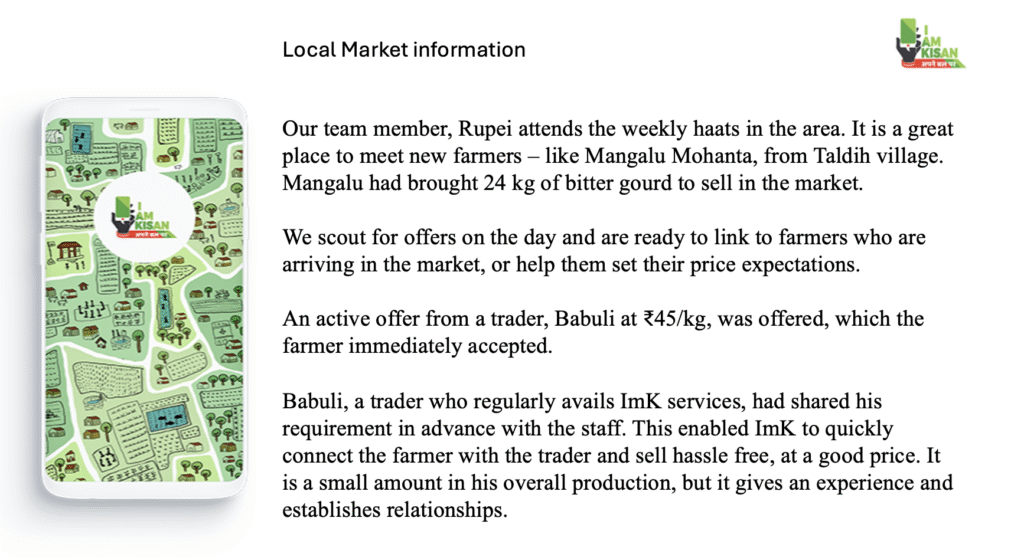
Based on our experience and the developments in the larger eco system over the last 8 years since we started, we plan to bring out our version 3 of the I am Kisan app. Md Moazzam helped us do some reflections, research, and the broad design of this next version.
In April 2024, we visited two clusters in Jhargram in the field area of SG foundation. In the Soro area, almost all farmers cultivate bitter gourd. This huge production gets market to their doorsteps through village level depots set up via local agents. The depots close by end of April. It is an interesting mix of market players, access to irrigation and farmer risk taking. Bitter gourd is a longer duration crop and those farmers who have irrigation availability, can continue the crop. However, farmers prefer to leave cultivation at this stage. It is too much of an effort to market. In another area, Banualiya, farmers have been cultivating bitter gourd and established direct link to Jamshedpur about 10 years ago. They experience a slump in the market around Ram Navami/Holi and are looking for an alternate market in that period. The combination of farmer inclination, resource availability, market linkages are all a nuanced mix that needs to be understood to support their enterprise. It needs long term work, with ear to the ground, understanding farmers’ perspective on why they do what they do.
In all this, an important thread is of experimentation with technology and absorbing the risks of innovation. We believe that this is the unique role and contribution of CSOs. It may not receive adequate attention given that CSOs, aided by the funding and operating environment, are pulled into market and play into managing market dynamics. This may divert away the efforts from all that is critical to build farmers’ own capacities and tools for managing the market as entrepreneurs – innovation, demonstrations, support, risk coverage. ImK collaborates with CSOs, and we look forward in 2026, to developing longer-term partnerships with a shared vision for farmers in the districts of Keonjhar, Mayurbhanj and adjoining areas. We look forward to launch IamKisan v3.0 in 2026 to serve small holder adivasi farmers credible information so they understand and build a relationship with the market.
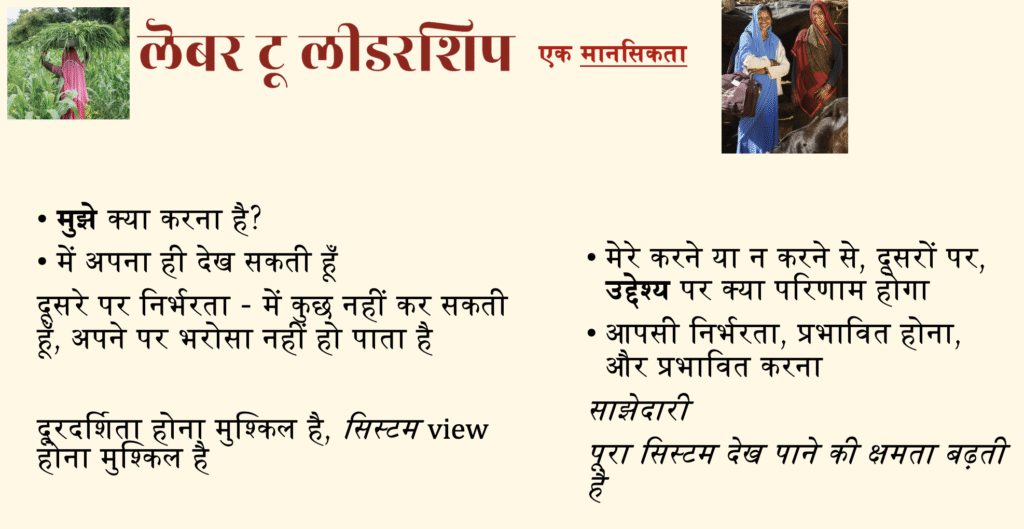
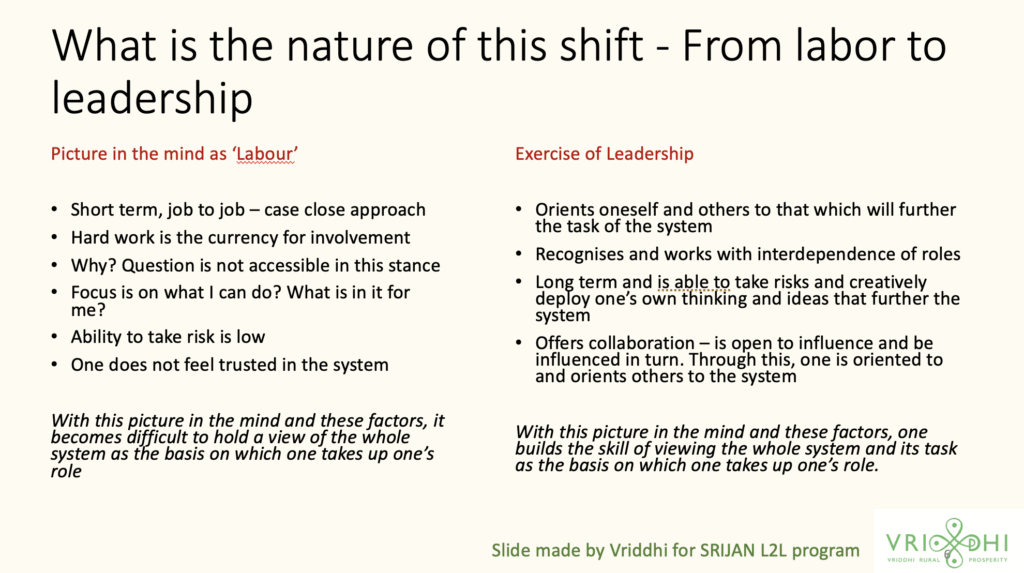
Labor to leadership, our second offering, is a one year leadership journey for community leaders in formal roles in farmer producer companies. It is designed as a set of three workshops, with intermittent, ongoing work with the CSO which has promoted the FPC. Labor to Leadership brings together our understanding in group relations or systems psychodynamics, the civil society organisation system, community organisations and the realities of agribusiness and agriculture.
It was first offered in 2022-23 to four FPCs in collaboration with SRIJAN with Vartika and Asha as consultants. This program started as most things do – a labor of our love and what felt in the moment as a setback! SRIJAN provided a nest for this work and continued to engage with the results as they came. We later partnered in Rajasthan (via Ibtada) and with Collectives for Integrated Livelihood Initiatives in Odisha. It is an initiative focussed on changing the place of women in agriculture, by augmenting their ability to run robust and profitable agribusiness companies. There were insights for each FPC and for promoters on what this shift of labor to leadership would mean and what it would take to sustain this. One can say, that labor to leadership is a kind of organisation development exercise of promoters with their FPCs.
We started our fifth batch in July 2025. Between 2023-25, we have worked with three CSOs. 159 role holders of 13 FPCs and their promoter organisations have through participation in one or more workshops, reflected about exercise of leadership, clarity of their roles and the unconscious resistances to women’s leadership at the level of the individual and the system. 154 of the participants have been women leaders. 47 FPC staff and 98 CSO staff have also participated in the workshops thinking about their roles and stances and how these hinder, or help women’s leadership.
Institutional communication is an important aspect of the idea of an institution. We thought FPCs should have a presence on the internet in this institutional space through LinkedIn. We initiated in this new space with two willing FPCs – who now run vibrant pages and the FPC presence on linked in has greatly increased in the last year! Niwari Kisan Mahila FPC has 800 followers! More from among SRIJAN promoted FPCs have set up their LinkedIn presence.
We endeavour to have more of the voices of the women leaders – their aspirations, preoccupations and the picture they want to share with the world – in this space.We were invited by DMI in Patna to share this experience. Mamta Prajapati, CEO Niwari joined us on the panel to speak with the students and faculty. The discussion brought out nuances of gender and leadership and amplified the voice of women leaders from the grassroots.
महिला किसान की बने पहचान
It is intensive meaningful work. The program benefits from conceptual and reflective support from Rosemary Viswanath. We expanded our group of consultants with Aparna Singh and Lokesh joining us from CEC Delhi for work in Rajasthan (with FPCs via Ibtada) and Anurag Sharma joined us for our work with Collectives for Integrated Livelihoods Initiatives (CInI) in Odisha. Jaison along with Aravind did some research for us on management tools that may aid Board of Directors of FPCs.
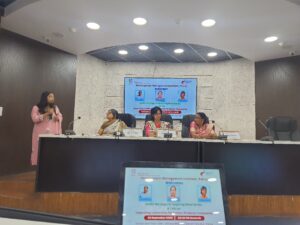
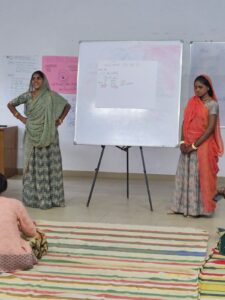
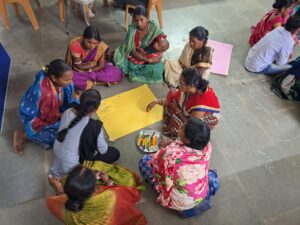
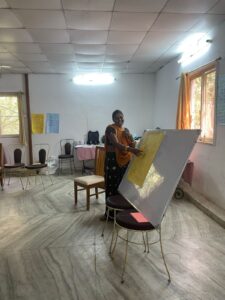
Over the years, we have been offering Reflection and Learning for leadership. Vartika joined three other development sector practitioners, to help Gram Vikas review its Water Secure Gram Panchayat program. In 2024-25, more organisations connected with us for discussion on learning, reflection, organisation development and consulting to individual dilemmas. We worked with two organisations on exploring leadership and building what supports leadership in their systems, work which will continue into this year.
We had a new experience of colleagues in CSOs seeking a dialogue to help think through a pressing organisational dilemma. We responded in spirit of collegiality. One of them developed into a structured process of role consultation offered by Vartika. Over a period of five months, we worked on understanding the experience in role through reflective sessions. It seemed to be helpful for those in leadership to understand how they are approaching their system, what are their own unconscious hooks in systems when they belong there and how these hooks may end up tripping their leadership and their systems.
An important effort this year was a landscape study on youth and youth development, supported by MacArthur Foundation. Rosemary Viswanath joined Vartika as co-consultant, together with Aparna Singh (co-author of the report) and Deepa Pohankar (Administrator). Starting in December 24/ January 25, this was an extensive process of listening to CSO colleagues, young people and to secondary data. The report was finalised and sharing and dialogue workshops organised. It has widened the scope of our understanding of young people, their difficulties. You can read the report HERE.
As always, this was also a period of interesting conversations which did not fructify into work together. We had discussions for
We prefer to do in person interventions in a reflective space. This means we are not able to engage with plans that are primarily online, or ensconced within an otherwise tightly designed retreat. However, all conversations give a window into different worlds and also lay the seed for ideas that will one day, somewhere find sunshine, or even may not! They give us the opportunity to understand systems.
The purpose of own work in learning and institutional development also becomes clear. We want to work with organisations and individuals that helps them lighten the load they are carrying of untested assumptions that are incompatible with their changing realities. This would allow them a reality orientation and the ability to exercise greater leadership in their part of the civil society space. In a sector that is so tuned on reputation, playbooks and on ‘knowing’, it is not easy . It requires a kind of reconciliation that new insights may rock the boat, but it is better than the stifling comfort of the familiar, even if one knows it’s not always to purpose. It means embracing an ongoing enquiry into one’s cherished assumptions as a necessary friend on the ‘road less travelled’!
We look forward to continuing this in 2026, with renewed focus and to single-mindedly pursue that which accelerates impact for small holder farmers, particularly women.
Wishing you all a good one too!
Asha, Pinki, Rupei, Sarat and Vartika
